
Does Hijama Help With Sleep? A Gentle Guide for Ladies Who Struggle to Switch Off
Does hijama help with sleep? A gentle guide for ladies on rest, tension and calmer nights.
Al-Amanah Editorial Team
Published on 10 November 2026
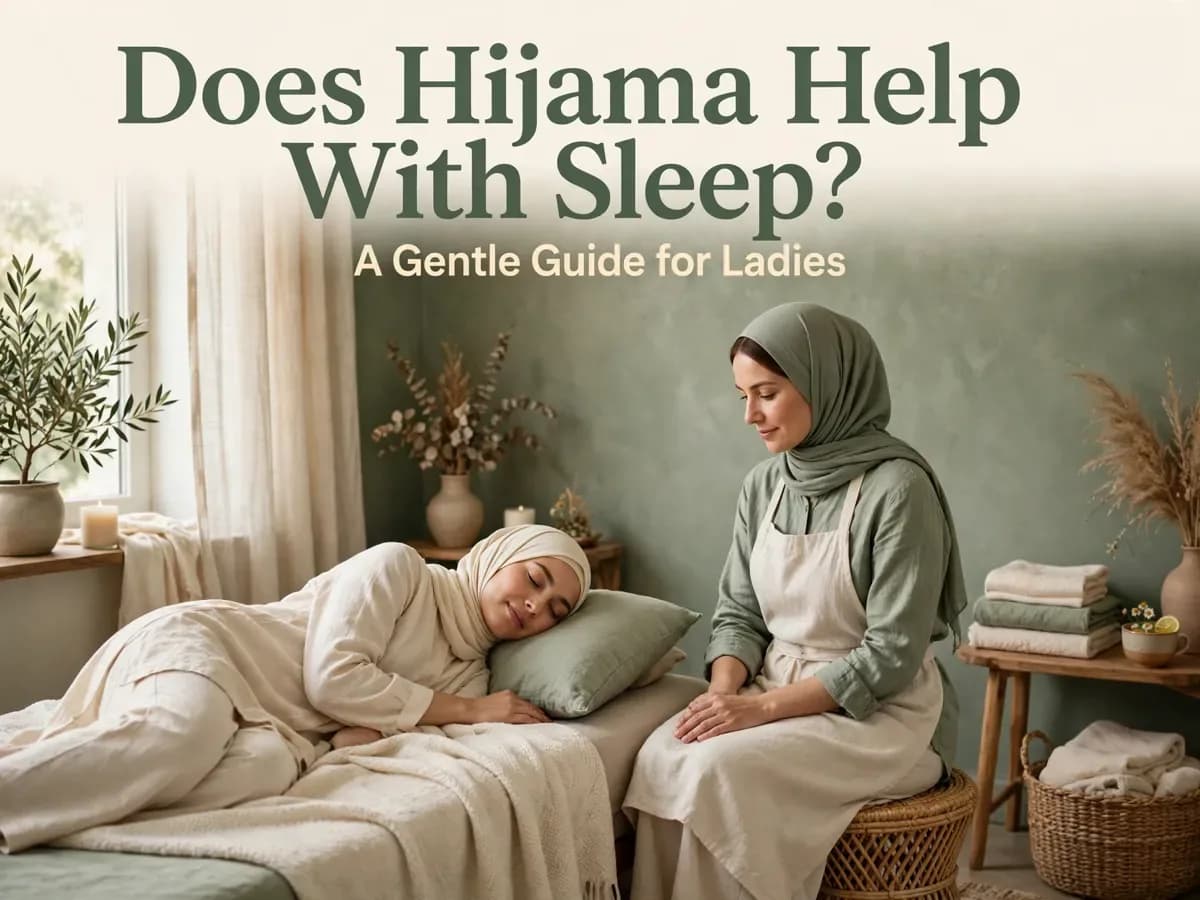
Does Hijama Help With Sleep? A Gentle Guide for Ladies Who Struggle to Switch Off
You are tired all day, and then bedtime arrives and your mind refuses to settle. Your shoulders are tight, your thoughts are still running, and sleep feels further away than it did an hour ago. Many ladies who book hijama ask the same question before their first session: will this actually help me sleep? The honest answer is that hijama is not a treatment for insomnia, but many ladies do find that a calm, unhurried session helps their body let go of the tension that was keeping them awake, and that can make the night that follows feel easier.
Why poor sleep and a tense body go together
Sleep is not just about feeling tired. Your body also needs to feel safe enough to switch off, and that is hard when your neck, shoulders, and upper back are holding the day's tension. A long day at a desk, carrying children, or simply worrying can leave those muscles tight long after the day has ended. You lie down, but the tightness stays with you, and your mind follows it. This is why so many sleep guides talk about relaxation first: a body that is still braced for the day does not drift off easily. Easing that physical tension does not fix every cause of poor sleep, but it removes one very common obstacle, and for many ladies that is enough to notice a difference.
What a session actually feels like
If you have never had hijama, it helps to know how calm the session itself is. You arrive, talk through your health and any worries with a female practitioner, and settle in for an unhurried appointment. Cups are placed on the skin to create gentle suction, and for wet cupping, small shallow marks are made before the cups draw a small amount of blood. The session is quiet, private, and paced without rush, which is part of the point: many ladies say the stillness of lying there, with nothing to do and nowhere to be, is the first time their body has properly slowed down all day. That feeling of slowing down is often what they carry into the evening.
Why some ladies sleep better after a session, and why some do not
After a session, ladies often report feeling deeply relaxed, pleasantly heavy, or ready for an early night. Others feel lighter and more energised at first, and sleep better the following night rather than the same one. Both are normal. A session that eases shoulder and back tension can take away the ache that was waking you, and a calmer evening can make it easier to fall asleep. But hijama will not sort out every sleep problem. If your sleep is disturbed by pain that needs medical attention, a diagnosed sleep condition, or something that has suddenly changed, speak to your doctor first. Hijama can sit alongside good care as a traditional wellness practice, not as a replacement for it, and any clinic that promises it will cure insomnia should be treated with caution.
Timing your session around your sleep
When you book matters more than most ladies expect. A late-afternoon or early-evening session suits many ladies, because it gives the body time to settle before bed without the rush of a morning appointment. Some ladies prefer a morning session and enjoy a calmer evening after a full day of unwinding, so there is no single right answer. What matters is giving yourself a quiet evening afterwards: no heavy exercise, no rushing to errands, and no late-night screens if you can avoid them. If you have an important early morning the next day, mention it when you book, so your practitioner can help you choose a time that leaves you rested rather than drained.
A calmer evening routine to go with it
A session works best when the evening around it is calm too. Keep the lights low, put your phone down an hour before bed, and have a warm drink instead of caffeine. A warm shower, loose nightclothes, and a cool, dark room all help your body understand that the day is over. If your practitioner suggested oil for the treated area, apply it gently and leave the marks alone. And be patient with yourself: one session may help, but a steady routine of good sleep habits, gentle movement, and unhurried care is what usually makes the real difference over time.
If better rest is part of why you are considering hijama, you are not alone in asking. At Al-Amanah Hijama Clinic, sessions are ladies-only, delivered by a female practitioner, at the clinic base in Bordesley Green East or as a mobile visit at your home across the West Midlands. First-time clients can ask about the complimentary 30-minute massage with a booked cupping session, subject to availability at booking. To arrange a session, message on WhatsApp or visit the contact page.
Frequently asked questions
Does hijama cure insomnia?
No. Hijama is a traditional wellness practice, not a treatment for insomnia. It may help by easing tension and encouraging relaxation, but a diagnosed sleep condition needs medical care.
Will I feel sleepy straight after my session?
Some ladies do, and some feel energised first and sleep better the next night. Both are normal, so plan a quiet evening afterwards either way.
Is it better to book in the evening if I want to sleep well?
Many ladies prefer late afternoon or early evening, but a morning session can work too. Choose a time that leaves your evening unhurried, and mention your routine when you book.
Can hijama help if my sleep problem is pain keeping me awake?
If tension or everyday aches are what keep you awake, easing them may help you settle. If the pain is new, severe, or unexplained, speak to your doctor first.
Should I change anything else about my sleep routine?
Yes. Keep regular sleep and wake times, limit screens before bed, and keep your room cool and dark. A session supports a good routine; it does not replace one.
Related Posts
What to Do After Hijama: A Simple Aftercare Guide for Ladies
Al-Amanah Hijama Practitioner Team
Providing dedicated traditional sunnah wet cupping, myofascial dry cupping, and restorative massage therapy. Based in Bordesley Green East, Birmingham with mobile home visit service covering Coventry, Walsall, Wolverhampton, Solihull, and the West Midlands & beyond.
Ready to restore vitality and release chronic muscle tension?
Book your session today with full transparency: Wet Cupping £30, Dry Cupping £25, Cupping Massage £30 (30m), Head Massage £30 (with free neck/shoulder cupping). Group discounts available.

More Clinical Guides
View allHijama Monthly Package: How a Regular Plan Works for Ladies
A hijama monthly package gives you a gentle rhythm — one calm session a month, reviewed together.
How to Prepare for Hijama: A Simple Guide for Ladies Before Your First Session
How to prepare for hijama — what to eat, drink and wear, and what to tell your practitioner.