How to Prepare for Hijama: A Simple Guide for Ladies Before Your First Session
How to prepare for hijama — what to eat, drink and wear, and what to tell your practitioner.
Al-Amanah Editorial Team
Published on 11 November 2026
Title: How to Prepare for Hijama: A Simple Guide for Ladies Before Your First Session
You have booked your first hijama session, and now a new question arrives: how do you actually prepare for it? The reassuring answer is that you do not need to buy anything special or change your whole week. A few small choices the day before and on the morning itself — what you eat, what you wear, and what you tell your practitioner — are enough to make the appointment calmer and more comfortable.
Eat lightly, and a little earlier than usual
The most repeated piece of preparation advice is about food. Eat a light meal a couple of hours before your session, and avoid arriving straight after a heavy meal. A full stomach can leave you uncomfortable once you are lying still, while arriving hungry can leave you light-headed. A simple, familiar meal that you know suits you is ideal. Some traditional guidance talks about an empty stomach, but do not starve yourself for the whole day, and do not skip food entirely if that leaves you shaky.
Drink water through the day, and ease off the caffeine
Drink water steadily through the day before your session and on the morning itself, rather than trying to make up for it with a large amount just before you arrive. A well-hydrated body is simply more comfortable during a session. On the day itself, ease off strong coffee and energy drinks: caffeine can leave you feeling wired and sensitive to the suction, which is the opposite of the calm state you want.
Rest well, and keep the day itself gentle
A good night's sleep the night before makes a real difference, so keep the evening before your session quiet. On the day itself, avoid heavy exercise, heavy lifting, or a packed schedule if you can. You do not need to clear your whole diary, but arriving tired or rushed leaves your body tense, and tension is exactly what you are hoping to ease. Give yourself enough time to get to the clinic, or to be ready at home, without hurrying.
Wear loose, modest clothing that is easy to adjust
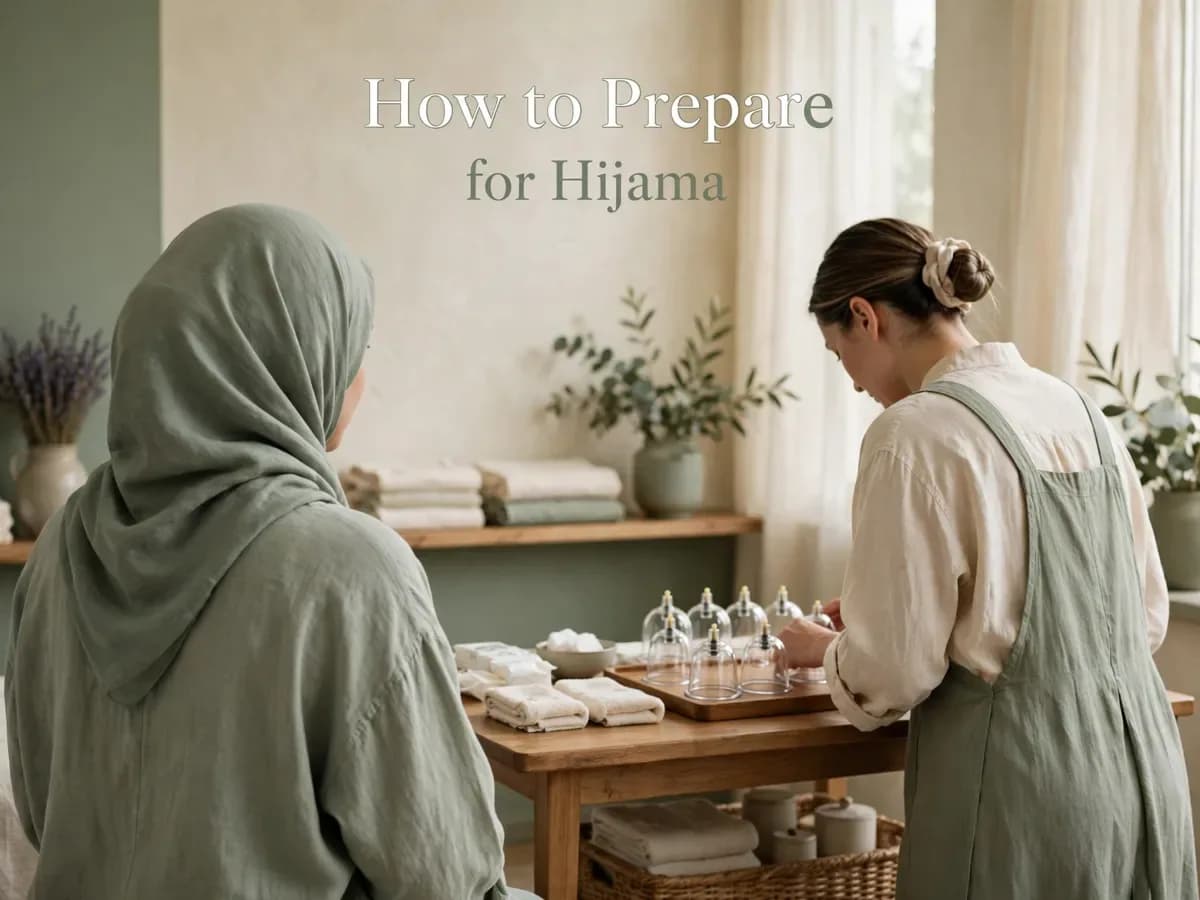
What you wear matters, because the practitioner needs comfortable access to the areas being treated, usually the back, neck, and shoulders. Choose loose, comfortable clothing with a top that is easy to adjust, and avoid tight sleeves or stiff fabrics. If you wear a headscarf, wear one that is easy to arrange around the neck and shoulders. Sessions at Al-Amanah are ladies-only and delivered by a female practitioner, in a private setting, so you can ask for whatever draping and privacy arrangements help you feel at ease.
Have a shower first, and leave the skin alone
A warm shower on the day of your session is a good idea: it leaves the skin clean and helps you feel fresh and relaxed. After that, leave the treated area alone. Avoid shaving it on the same day, and skip exfoliating scrubs, strong creams, or perfumed oils where cups will be placed, as anything that irritates the skin can make suction feel less comfortable. If you have a rash, cut, sunburn, or skin infection on the area to be treated, tell the clinic before your appointment — they may suggest waiting until the skin has settled.
Tell your practitioner everything that matters
Mention any medical conditions, medicines you take, and anything that worries you, including if you are pregnant, on your period, anaemic, or taking blood-thinning medicine. Never stop a prescribed medicine just for a session — if you take blood thinners or have a bleeding condition, speak to your doctor first and tell the clinic what your doctor said. If you feel unwell on the day, it is better to reschedule than to push ahead.
If it is a home visit, prepare a quiet corner
For a mobile visit, the practitioner brings the equipment, cups, draping, and oils, so you do not need to prepare anything clinical. What helps most is a quiet, clean corner where you can lie comfortably, with enough room to move around the treatment area and a little privacy. Clear the space beforehand, put fresh towels out if you have them, and settle children and pets elsewhere for the length of the session if you can.
Bring your questions, and arrive unhurried
Finally, bring the questions you have been holding back: how many points will be treated, what the marks afterwards usually look like, what to do after the session, and when you might book again. There is no question too small at a first appointment. Preparation for hijama is not about doing more — it is about removing the small worries so the session itself can be calm, private, and unhurried.
At Al-Amanah Hijama Clinic, sessions are ladies-only, delivered by a female practitioner, at the clinic base in Bordesley Green East or as a mobile visit at your home across the West Midlands. First-time clients can ask about the complimentary 30-minute massage with a booked cupping session, subject to availability at booking. To arrange a session, message on WhatsApp or visit the contact page.
Frequently asked questions
Should I fast before hijama?
No, not for the whole day. Have a light meal a couple of hours before your session, and avoid arriving either starving or straight after a heavy meal. If you are unsure, ask the clinic when you book.
Can I drink coffee before my session?
It is better to ease off strong coffee and energy drinks on the day, as they can leave you feeling wired and sensitive to suction. Water or a warm herbal drink is a better choice that morning.
What should I wear to my appointment?
Loose, comfortable clothing with a top that is easy to adjust, since the practitioner usually needs access to the back, neck, and shoulders. Your most comfortable outfit is the right one.
Should I shower before hijama?
Yes, a warm shower on the day is a good idea. Afterwards, avoid shaving the treated area, exfoliating, or applying strong creams or perfumed oils there.
What if I take medicine or feel unwell on the day?
Tell your practitioner and, for blood thinners or a bleeding condition, speak to your doctor first — never stop prescribed medicine just for a session. If you are unwell or have a skin infection, reschedule.
Related Posts
Al-Amanah Hijama Practitioner Team
Providing dedicated traditional sunnah wet cupping, myofascial dry cupping, and restorative massage therapy. Based in Bordesley Green East, Birmingham with mobile home visit service covering Coventry, Walsall, Wolverhampton, Solihull, and the West Midlands & beyond.
Ready to restore vitality and release chronic muscle tension?
Book your session today with full transparency: Wet Cupping £30, Dry Cupping £25, Cupping Massage £30 (30m), Head Massage £30 (with free neck/shoulder cupping). Group discounts available.

More Clinical Guides
View allHijama Monthly Package: How a Regular Plan Works for Ladies
A hijama monthly package gives you a gentle rhythm — one calm session a month, reviewed together.
Does Hijama Help With Sleep? A Gentle Guide for Ladies Who Struggle to Switch Off
Does hijama help with sleep? A gentle guide for ladies on rest, tension and calmer nights.