
Hijama for Migraines: What the Traditional Practice Involves for Ladies
Hijama for migraines, explained gently for ladies: what the traditional practice involves, why the head, neck and shoulders matter, what a session feels like, and when to speak to your doctor first. Ladies-only care, unhurried and private.
Al-Amanah Editorial Team
Published on 4 November 2026
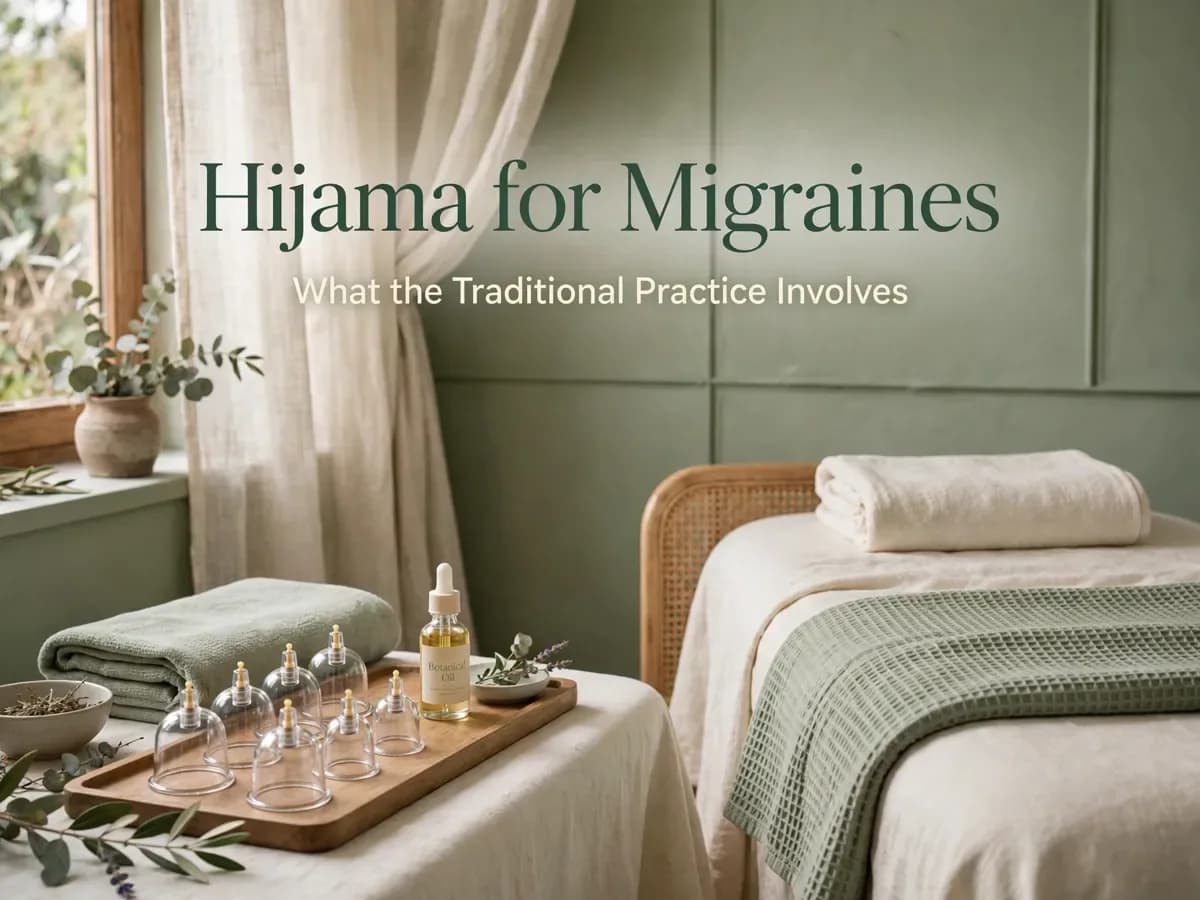
Hijama for Migraines: What the Traditional Practice Involves for Ladies
If you live with migraines, you will know they are not just bad headaches. They can steal a whole day — the throbbing, the sensitivity to light and sound, the nausea, the need to lie still in a dark room until it passes. So it is no surprise that many ladies ask whether hijama, the traditional wet-cupping practice, has anything to offer them. This guide answers that question honestly: what hijama for migraines traditionally involves, what a session looks like, and — just as importantly — what it is not.
Hijama is a traditional wellness practice in which gentle suction is applied to the skin and combined with small, superficial skin incisions. It is not a cure for migraines, and it should never replace medical care. What it offers, in traditional terms, is a calm, unhurried session focused on relaxation, easing tension, and supporting general wellbeing — and for many ladies, that is exactly what they are looking for alongside their usual care.
Why ladies ask about hijama for migraines
Migraines often travel with tension. Many ladies carry stress in the neck, shoulders, and base of the skull, and that tightness can sit alongside headache episodes, making the whole experience feel heavier. Traditional hijama practice pays close attention to exactly those areas: the upper back, the neck, the shoulders, and the head and temple region. That is why migraine guides keep returning to the same points — the places where tension gathers are the places a session focuses on.
There is also the question of privacy. A migraine session touches the head and neck, and many ladies would far rather be treated by a female practitioner, in a private room or in their own home, than in a mixed setting. A ladies-only clinic exists for exactly that reason: so you can relax properly, without worrying about who else is in the room.
What a hijama session for migraines usually involves
Every session begins with a conversation, not with cups. Your practitioner will ask about your migraine pattern, your health history, any medication you take, and anything that worries you — including anaemia, diabetes, a bleeding disorder, pregnancy, or blood-thinning medication. Be honest here, even about things that feel private: that conversation lets her tailor the session to you and say plainly if dry cupping, which uses suction alone with no incisions, would suit you better this time.
Once you are settled, cups are placed on the chosen areas — often the upper back, neck, and shoulders, and sometimes around the head — and gentle suction is applied. Most ladies describe a firm pulling feeling rather than pain, and the pressure can be adjusted if it feels too strong. In a wet-cupping session, the cups are then removed, the area is cleaned, and very small, superficial scratches are made with sterile, single-use equipment, before the cups are reapplied briefly. The treated areas are then cleaned and cared for, often with a soothing botanical oil, and you will be talked through simple aftercare: rest for the rest of the day, keep the area clean and covered, sip water, and avoid heavy exercise and hot baths for the first day or so.
A session is deliberately unhurried, including the consultation at the start and the aftercare guidance at the end, so you are never rushed through any stage. If anything feels wrong at any point, you can ask to pause or stop.
What hijama for migraines is not
This is the part that matters most, and a trustworthy practitioner will say it plainly. Hijama does not cure migraines. No traditional practice can promise that, and any clinic that does should be treated with caution. Experiences vary from person to person: some ladies report feeling lighter, calmer, and less tense after a session, while others notice little change in their migraine pattern. That honesty is part of good care, not a weakness in it.
There are also times to speak to your doctor first, before booking. If your migraines are new, sudden, severe, or changing in pattern, if they come with weakness, vision changes, slurred speech, or fever, or if you have a serious health condition, get medical advice first and tell your practitioner what your doctor said. Hijama sits alongside medical care, never instead of it, and a good practitioner will want to know about your medical history before she treats you.
Book a ladies-only hijama session
If this guide has answered your questions about hijama for migraines, the next step is a simple conversation. Message on WhatsApp or visit the contact page, and the clinic will confirm times and answer any remaining questions before you commit. Sessions are ladies-only, with a female practitioner, in clinic or as a discreet mobile home visit across the West Midlands. First-time female clients also receive a complimentary 30-minute massage with their cupping session, subject to the clinic confirming session details.
Frequently asked questions — hijama for migraines
Does hijama cure migraines?
No. Hijama is a traditional wellness practice, not a cure, and it should never replace medical care. Some ladies report feeling calmer and less tense after a session, but experiences vary, and no outcome can be promised.
Which areas are treated in a hijama session for migraines?
Usually the upper back, neck, and shoulders, and sometimes the head and temple region — the areas where tension commonly gathers. Your practitioner will agree the points with you during the consultation, based on your pattern and comfort.
Does a hijama session for migraines hurt?
Most ladies describe the suction as a firm pulling feeling, and the incision stage of wet cupping as a brief scratchy sensation that passes quickly. Pressure can be adjusted, and you can ask to pause or stop at any point.
Should I see my doctor before booking for migraines?
Yes, if your migraines are new, sudden, severe, or changing, or if you have a serious health condition or take blood-thinning medication. Tell your practitioner about your medical history and anything your doctor has advised, so the session can be planned safely.
Can I have dry cupping instead if I do not want wet cupping?
Yes. Dry cupping uses suction alone, with no incisions, and cupping massage glides oiled cups smoothly across the back and shoulders for relaxation. Either is a perfectly good first step if the wet-cupping stage does not feel right for you.
Related Posts
How Often Should You Do Hijama? A Gentle Guide for Ladies
Hijama for Back Pain: What to Know Before You Book in Birmingham
Al-Amanah Hijama Practitioner Team
Providing dedicated traditional sunnah wet cupping, myofascial dry cupping, and restorative massage therapy. Based in Bordesley Green East, Birmingham with mobile home visit service covering Coventry, Walsall, Wolverhampton, Solihull, and the West Midlands & beyond.
Ready to restore vitality and release chronic muscle tension?
Book your session today with full transparency: Wet Cupping £30, Dry Cupping £25, Cupping Massage £30 (30m), Head Massage £30 (with free neck/shoulder cupping). Group discounts available.

More Clinical Guides
View allHijama Monthly Package: How a Regular Plan Works for Ladies
A hijama monthly package gives you a gentle rhythm — one calm session a month, reviewed together.
How to Prepare for Hijama: A Simple Guide for Ladies Before Your First Session
How to prepare for hijama — what to eat, drink and wear, and what to tell your practitioner.