Is Hijama Safe for Ladies? An Honest Guide to Hygiene, Marks and Who Should Check First
Is hijama safe for ladies? An honest answer: what sterile hygiene really means, what marks and tiredness are normal, and who should speak to a doctor first — written for first-timers, with no pressure to book.
Al-Amanah Editorial Team
Published on 4 November 2026
Is Hijama Safe for Ladies? An Honest Guide to Hygiene, Marks and Who Should Check First
If you are thinking about hijama for the first time, one question usually comes before all the others: is it safe? This guide gives you the honest version — what safe practice actually looks like, what is normal afterwards, and when the right answer is to check with your doctor first.
Hijama, or wet cupping, is a traditional practice in which gentle suction is applied to the skin and combined with small, superficial skin incisions. Dry cupping uses suction alone, with no incisions. The safety picture is different for the two, and a good practitioner will explain which one she is recommending for you and why, before anything begins. Hijama is a traditional wellness practice, not a medical treatment, and it never replaces medical care.
Is hijama safe? What safe practice actually looks like
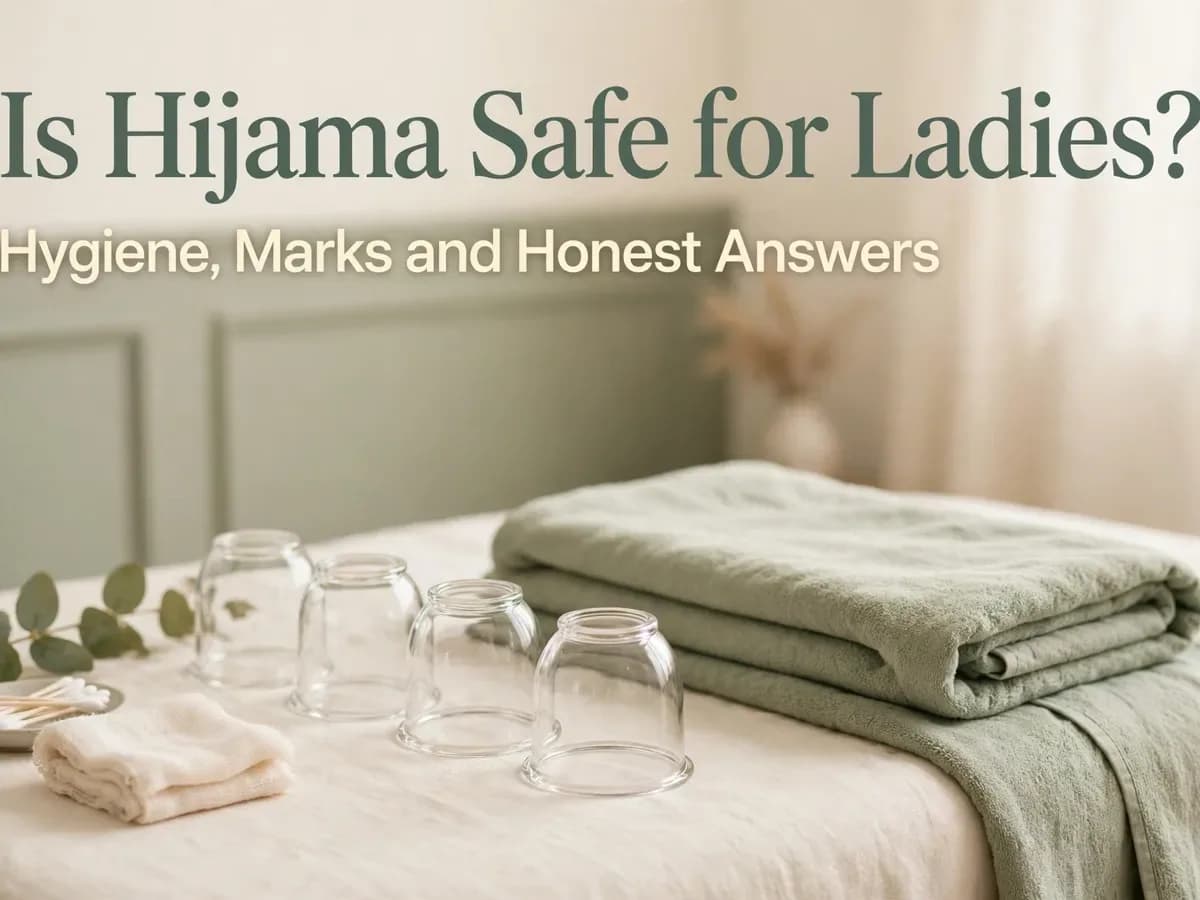
Safety in hijama is mostly about hygiene, screening, and honesty — not about fancy equipment. At a well-run session, cups and blades are sterile and single-use, opened in front of you and never reused between clients. Reusable surfaces are cleaned and disinfected, the skin is cleaned before treatment, and the practitioner wears gloves and works in a clean, private space.
Screening matters just as much as hygiene. Before treatment, your practitioner should ask about your health history, your medicines, and anything that worries you, including pregnancy, anaemia, bleeding disorders, blood-thinning medicine, diabetes, and skin conditions in the area to be treated. Be honest, even about private things. That conversation lets her tailor the session, choose the gentler option where it fits, or say plainly that hijama is not right for you at this time.
Marks, soreness and tiredness afterwards — what is normal
Most ladies worry most about what they will look and feel like afterwards, so here is the plain version. Round marks where the cups sat are normal, caused by suction, and usually fade within a few days. Mild soreness around the treated area is also normal, much like the feeling after a deep massage, and it usually settles quickly.
Some ladies feel tired or slightly light-headed after a session, especially after wet cupping. Resting afterwards, sipping water, and taking the day gently usually sorts this out. Your practitioner should talk you through simple aftercare before you leave: keep the area clean and covered, avoid hot baths and heavy exercise for the first day or so, and let her know if anything feels wrong. Marks that become very painful, hot, swollen, or show signs of infection, or bleeding that does not settle, are not normal — seek medical attention promptly.
Who should check with a doctor first
There are times when the right step is a medical conversation before booking, and a trustworthy practitioner will say so without embarrassment. Speak to your doctor first if you are pregnant, if you have anaemia or a bleeding or clotting disorder, if you take blood-thinning medicine, if you have diabetes, if you have a serious heart condition, or if you have eczema, psoriasis, an open wound, or an active skin infection in the area to be treated. Wet cupping is generally not advised during pregnancy or on broken or infected skin.
This is not a list to feel judged by. Many ladies in these situations are offered a gentler option, such as dry cupping or cupping massage, or are advised to wait until the timing is better. If a practitioner tells you that everyone can have wet cupping regardless of health history, that is a reason to pause and get a second opinion.
Questions to ask any practitioner before you book
You do not need medical knowledge to judge a clinic — you need straight answers to a few simple questions. Are your cups and blades sterile and single-use? Do you ask about my medicines and health history before treatment? What should I expect afterwards, and what would you want me to contact you about? Is the session ladies-only, with a female practitioner, and can I have a private room or a discreet home visit? Vague answers, pressure to book on the spot, or promises that hijama will cure a condition are all reasons to look elsewhere.
The honest summary is this: hijama is generally low-risk when it is done by a trained practitioner with sterile, single-use equipment and proper screening, and most side effects are mild and short-lived. It is not risk-free, because anything that breaks the skin carries some risk, and it is not suitable for everyone.
Book a ladies-only hijama session
If this guide has answered your questions, the next step is a simple conversation. Message on WhatsApp or visit the contact page, and the clinic will confirm times before you commit. Sessions are ladies-only, with a female practitioner, in clinic or as a discreet mobile home visit across the West Midlands. First-time female clients also receive a complimentary 30-minute massage with their cupping session, subject to the clinic confirming session details.
Frequently asked questions
Is hijama safe for first-timers?
Yes, in the sense that matters most: when a trained practitioner uses sterile, single-use equipment, screens your health history, and explains what to expect, most first-timers have a calm session with only mild, short-lived effects. If you are nervous, starting with dry cupping or cupping massage is a perfectly good first step, with no incisions involved.
Will the marks leave scars?
The round cup marks are not scars. They are temporary discoloration from suction and usually fade within a few days. The small, superficial incisions used in wet cupping are very shallow and heal like tiny scratches. Lasting marks are uncommon when hygiene and aftercare are followed, but tell your practitioner if any area stays painful, hot, or swollen.
Does hijama hurt?
Most ladies describe a firm pulling feeling from the suction rather than pain, and the pressure can be adjusted to your comfort. The incisions in wet cupping are very light and brief, often described as a slight sting. If anything feels wrong during the session, you can ask to pause or stop at any point.
Can I have hijama while pregnant or on my period?
Wet cupping is generally not advised during pregnancy, so speak to your doctor first and tell your practitioner. Around your period, many practitioners advise waiting until the heavier days have passed, and some ladies prefer to book at another time in their cycle. Your practitioner can talk through the timing that suits you.
What should I do if something feels wrong afterwards?
Rest, keep the area clean and covered, and contact the clinic so they can advise you. If you notice spreading redness, heat, swelling, signs of infection, or bleeding that does not settle, seek medical attention promptly rather than waiting to see if it passes.
Related Posts
What to Do After Hijama: A Simple Aftercare Guide for Ladies
Al-Amanah Hijama Practitioner Team
Providing dedicated traditional sunnah wet cupping, myofascial dry cupping, and restorative massage therapy. Based in Bordesley Green East, Birmingham with mobile home visit service covering Coventry, Walsall, Wolverhampton, Solihull, and the West Midlands & beyond.
Ready to restore vitality and release chronic muscle tension?
Book your session today with full transparency: Wet Cupping £30, Dry Cupping £25, Cupping Massage £30 (30m), Head Massage £30 (with free neck/shoulder cupping). Group discounts available.

More Clinical Guides
View allHijama Monthly Package: How a Regular Plan Works for Ladies
A hijama monthly package gives you a gentle rhythm — one calm session a month, reviewed together.
How to Prepare for Hijama: A Simple Guide for Ladies Before Your First Session
How to prepare for hijama — what to eat, drink and wear, and what to tell your practitioner.